
Indonesia
Discovering the Largest Islands in Indonesia: Where Nature and Culture Meet
Mar
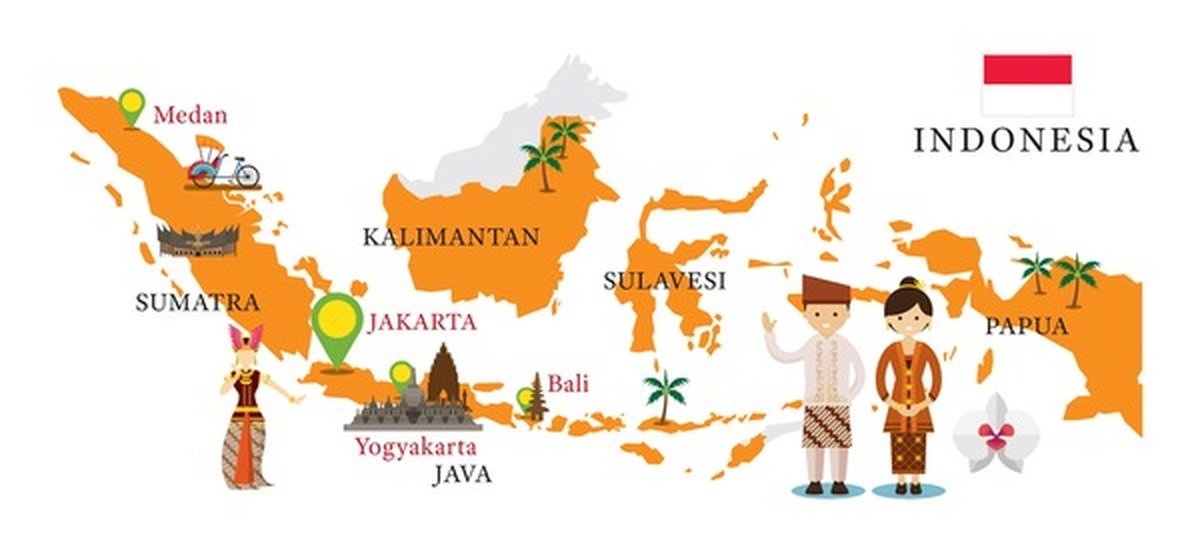
Indonesia is not merely a destination—it is a vast geographical wonder shaped by thousands of islands scattered across the equator. As the largest archipelago in the world, it stretches between continents and oceans, creating a unique meeting point of cultures, ecosystems, and histories. While many travelers associate Indonesia with tropical beaches and famous tourist destinations, there is a deeper story hidden within its largest islands—places where nature, culture, and time itself seem to unfold on a grand scale.
These islands are not simply large in size. They are living environments that sustain millions of people, protect some of the richest biodiversity on Earth, and preserve traditions that have endured for centuries. To understand Indonesia is to explore these giants—each one offering a distinct perspective on what makes this country truly extraordinary.
Kalimantan — The Ancient Rainforest Realm
Kalimantan, the Indonesian portion of Borneo, stands as one of the most important rainforest regions in the world. As part of the third-largest island on Earth, it holds ecosystems that date back millions of years, making it one of the oldest tropical rainforests still in existence. The scale of this island is difficult to grasp until one experiences it firsthand. Endless stretches of dense forest dominate the landscape, forming a vast green expanse that appears almost untouched from above.
Within this environment, life thrives in remarkable ways. The forests of Kalimantan are home to iconic species such as orangutans, as well as countless plants and animals found nowhere else in the world. The ecosystem is complex and delicate, functioning as a natural regulator of climate and a vital carbon sink that impacts not only Indonesia but the entire planet.
Human life in Kalimantan is deeply intertwined with nature. Rivers play a central role, acting as transportation routes, sources of livelihood, and cultural lifelines for local communities. Villages are often built along riverbanks, reflecting a way of life that has adapted to the rhythms of the natural world. Despite modern pressures such as deforestation and industrial expansion, Kalimantan still retains vast areas of wilderness that remind us of the Earth’s ancient past.
Sumatra — The Land of Fire and Diversity
Sumatra presents a dramatic contrast, shaped by powerful geological forces that continue to define its identity. The island lies along a tectonic boundary, making it one of the most geologically active regions in the world. Volcanoes rise prominently across the landscape, creating a terrain that is both fertile and unpredictable. This constant interaction between creation and destruction has given rise to ecosystems that are rich, dynamic, and full of life.
The natural environment of Sumatra supports an extraordinary range of biodiversity. It is one of the last remaining habitats for critically endangered species such as the Sumatran tiger, elephant, and rhinoceros. These animals exist within dense rainforests that are increasingly rare on a global scale, making conservation efforts on the island especially important.
Beyond its natural features, Sumatra is also a cultural mosaic. Different regions of the island are home to distinct ethnic groups, each with their own traditions, languages, and architectural styles. From the highlands surrounding Lake Toba to the western coastal areas, cultural identity remains closely tied to the land. Daily life often reflects a balance between maintaining tradition and adapting to modern influences, creating a rich and evolving social landscape.
Sulawesi — The Island of Unique Cultures
Sulawesi offers a different perspective on what defines a large island. Its unusual, multi-peninsular shape creates natural divisions that have historically limited interaction between regions. As a result, communities across Sulawesi have developed unique cultural identities, many of which remain strong to this day.
In the highland areas, traditional practices continue to play a significant role in daily life. Ceremonies, rituals, and architectural styles reflect deep-rooted beliefs that have been passed down through generations. These cultural expressions are not simply preserved as history; they are actively practiced and remain relevant in modern society.
At the same time, Sulawesi is surrounded by some of the most biodiverse marine environments in the world. The waters around the island are part of the Coral Triangle, a region known for its exceptional marine life. Coral reefs flourish beneath the surface, supporting ecosystems that are both fragile and vital. This connection between land and sea creates a balanced environment in which natural and cultural elements coexist in harmony.
Sulawesi demonstrates how geography can shape not only the physical environment but also the cultural evolution of a place. It is an island where diversity is not just present—it is fundamental.
Java — The Heart of Modern Indonesia
Java stands at the center of Indonesia’s national life, both geographically and culturally. Although it is smaller in size compared to other major islands, its influence is immense. Home to more than half of the country’s population, Java serves as the political, economic, and cultural core of Indonesia.
The island is defined by its contrasts. Urban areas are vibrant and constantly evolving, driven by economic activity and technological advancement. Cities such as Jakarta reflect the energy of a rapidly developing nation, where modern infrastructure and global influences are increasingly visible. Yet beyond the cities, Java reveals a quieter, more traditional side. Rural landscapes stretch across the island, where agriculture remains an essential part of daily life and cultural traditions continue to be practiced.
Java is also shaped by its many volcanoes, which are both a source of danger and a provider of life. Volcanic soil is highly fertile, supporting agriculture that sustains millions of people. At the same time, the presence of active volcanoes serves as a reminder of the island’s dynamic natural forces. This balance between opportunity and risk is a defining characteristic of life in Java.
Historical heritage is deeply embedded in the island as well. Ancient temples and cultural landmarks stand as enduring symbols of past civilizations, offering insight into the long and complex history that has shaped modern Indonesia. In Java, the past and present are not separate—they exist together, influencing one another in meaningful ways.
Papua — The Last Frontier
Papua represents one of the most remote and least explored regions in Indonesia, and perhaps in the world. Its vast and rugged landscape creates an environment that feels both powerful and isolated. Dense rainforests cover much of the land, while towering mountains rise dramatically in the distance, forming one of the most striking natural landscapes in Southeast Asia.
What sets Papua apart is not only its geography but also its cultural depth. Indigenous communities have lived in this region for thousands of years, maintaining ways of life that are closely connected to the natural environment. Their knowledge of the land, passed down through generations, reflects a deep understanding of sustainability and balance.
Unlike more developed regions, Papua remains relatively untouched by large-scale modernization. This has allowed both its ecosystems and cultural traditions to endure in ways that are increasingly rare. However, this also presents challenges, as the region faces pressures from development and the need for economic growth.
Papua offers a rare glimpse into a world where nature still dominates and where cultural identity remains deeply rooted in the land. It is not just a destination, but a reminder of what the world once was—and what it still can be.
The Bigger Picture
The largest islands of Indonesia are more than geographical features; they are the foundation of the nation’s identity. Each island reflects a different balance between nature, culture, and human life, creating a diversity that is both vast and deeply interconnected.
Together, they tell a story of resilience, adaptation, and coexistence. They remind us that even in a rapidly changing world, there are places where nature continues to lead and where traditions remain strong.
To truly understand Indonesia is to look beyond its surface and explore the depth of its islands. In doing so, we discover not only the scale of the land, but also the richness of the life it supports—an enduring testament to the beauty and complexity of this remarkable archipelago.
